
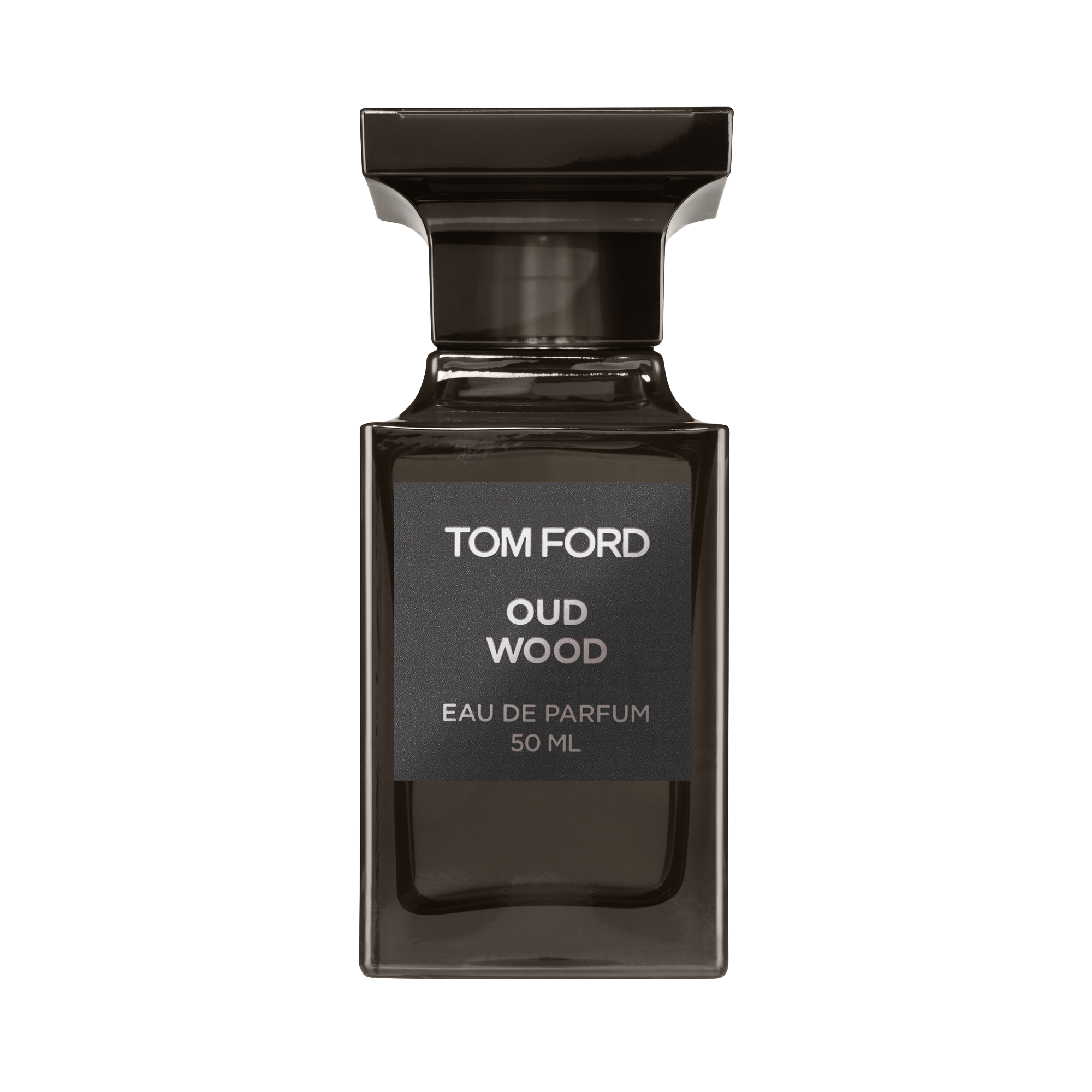
The house: private luxury, made deliberately personal
When Tom Ford Beauty introduced Private Blend in 2007, it was not pitched as a wardrobe of polite flankers. It arrived as a set of 12 unisex eau de parfums—Oud Wood among them—meant to be worn singly or layered, a deliberately connoisseur-facing counterpoint to mainstream fragrance architecture. The collection included future pillars such as Tobacco Vanille, Tuscan Leather, Noir de Noir and Neroli Portofino, and it established the grey-bottled Tom Ford code: cinematic, expensive, slightly dangerous, yet polished enough for a Madison Avenue counter. ([nstperfume.com](https://nstperfume.com/2007/02/2/tom-ford-private-blend-new-collection-of-fragrances/))
Oud Wood was composed by Richard Herpin, and its authorship matters because the fragrance does not behave like a blunt prestige object. It is controlled. It edits oud rather than exhibits it. In 2007, Western perfumery was still learning how to speak oud fluently; the material was familiar in Middle Eastern, South Asian and East Asian fragrant traditions, but in Western designer perfumery it still carried an aura of the difficult and the exotic. Tom Ford had already helped push the note into that arena with Yves Saint Laurent M7 in 2002; Oud Wood, five years later, made the gesture smoother, darker and far easier to wear. ([nstperfume.com](https://nstperfume.com/2009/02/17/tom-ford-private-blend-oud-wood-fragrance-review/))
The material: oud without the roar
Strictly speaking, oud is not simply “wood.” Agarwood is resin-saturated fragrant heartwood formed in genera such as Aquilaria and Gyrinops, often after injury and fungal infection; the oil distilled from it is valued for its low volatility, persistence and richly smoky profile. ([link.springer.com](https://link.springer.com/article/10.1007/s12231-018-9408-4)) Traditional oud oils can smell medicinal, barnyard, leathery, fermented, balsamic or almost blue-black in their depth. Oud Wood is not that feral animal. It is oud seen through smoked glass: recognizably resinous, but trimmed of excess, placed in a tailored composition of spice, polished woods and amber warmth.
The official Tom Ford description gives the structure clearly: exotic rosewood and cardamom move into oud notes with sandalwood and vetiver, while tonka bean and amber supply warmth. The brand’s current key-note listing highlights cardamom, pink pepper, patchouli, amber, oud and tonka bean; Fragrantica’s listing adds Brazilian rosewood, Sichuan pepper, sandalwood, vanilla and vetiver to the picture. ([tomfordbeauty.com](https://www.tomfordbeauty.com/product/oud-wood-eau-de-parfum)) Read as perfume rather than pyramid, the effect is a chamber ensemble. Cardamom is the cool green spark at the opening—dry, aromatic, almost metallic. Pink and Sichuan pepper lend lift and prickle without turning the fragrance culinary. Rosewood bridges spice to wood with a rosy, pencil-shaving elegance.
Then comes the trick: the oud is cushioned before it can become confrontational. Sandalwood gives a creamy, milled smoothness; vetiver adds a dry rootiness that keeps the base from collapsing into sweetness; patchouli contributes a shadow of earth. Tonka, amber and vanilla do not make Oud Wood gourmand, but they round its corners. They are the suede lining inside the wooden box. This is why the fragrance can feel simultaneously smoky, warm spicy, aromatic and urbane: every potentially rough material is answered by something smooth, and every sweetness is corrected by dryness.
Its moment: the Western oud in evening clothes
Oud Wood mattered because it made oud legible to people who did not necessarily want the full ceremonial force of oud oil. A 2009 review in Now Smell This described it as quieter and easier than M7, with the oud softened by vanilla and other woods, and noted that lovers of denser Montale-style ouds might find it insufficiently emphatic. That remains one of the fairest readings of the perfume. ([nstperfume.com](https://nstperfume.com/2009/02/17/tom-ford-private-blend-oud-wood-fragrance-review/)) Oud Wood is influential not because it is the most authentic oud experience, but because it helped define a Western luxury oud idiom: clean, dry, smoky, darkly sensual, beautifully wearable.
Its reputation has settled into classic status, though not without debate. Fragrantica lists Oud Wood as a 2007 unisex oriental woody fragrance and shows a large, still-active review base, evidence of how firmly it remains in conversation nearly two decades later. ([fragrantica.com](https://www.fragrantica.com/perfume/Tom-Ford/Private-Blend-Oud-Wood-1826.html)) Yet the modern criticism is consistent: some wearers want more projection and more longevity, particularly at Private Blend pricing. Reformulation claims circulate often, but they are difficult to verify from the outside; what can be said responsibly is that Tom Ford’s own product page notes ingredient lists may change and should be checked on the package. ([tomfordbeauty.com](https://www.tomfordbeauty.com/product/oud-wood-eau-de-parfum)) On skin today, Oud Wood is best judged as a refined aura fragrance, not a room-filling oud bomb.
How to wear it
Oud Wood is unisex, but it does lean tailored: crisp wool, black cashmere, white shirt, bare skin after a hot shower. It flatters people who like quiet authority rather than sweetness or obvious freshness. On many skins it projects clearly for the first hour, then settles into a close, elegant woody-amber radius; on fabric, the drydown can persist longer, especially the cardamom-tonka-sandalwood haze. Expect moderate longevity rather than beast-mode performance. Two sprays are civilized; four can restore presence without turning vulgar.
Seasonally, it is most beautiful from autumn through early spring, and on cool summer nights when the air can carry its smoke. It is an excellent dinner fragrance, a hotel-bar fragrance, a gallery-opening fragrance, a fragrance for cashmere at dusk. For office wear, it works if applied lightly: it has polish, not volume. It may disappoint anyone seeking a syrupy amber, a sweet vanilla, or the animalic growl of traditional oud oils. But for those who want woods rendered with architectural restraint, Oud Wood remains unusually persuasive.
Two small secrets in the grain
First, Oud Wood was never an isolated accident; it was part of the original Private Blend grammar, a collection designed as Ford’s personal “scent laboratory,” where the fragrances could stand alone or converse with one another. ([fragrantica.com](https://www.fragrantica.com/perfume/Tom-Ford/Private-Blend-Oud-Wood-1826.html)) That explains its balance: it has enough personality to be worn solo, but enough negative space to layer.
Second, its name is almost a manifesto. Oud Wood does not promise oud in its most sacred, difficult or historically dense form. It promises oud as wood: planed, smoked, sanded, warmed by skin. Its genius is not excess, but translation. Like the best Tom Ford tailoring, it knows exactly how much darkness to show.